
An Uplifting Family Guide · Book 1
When Big Feelings Take Over
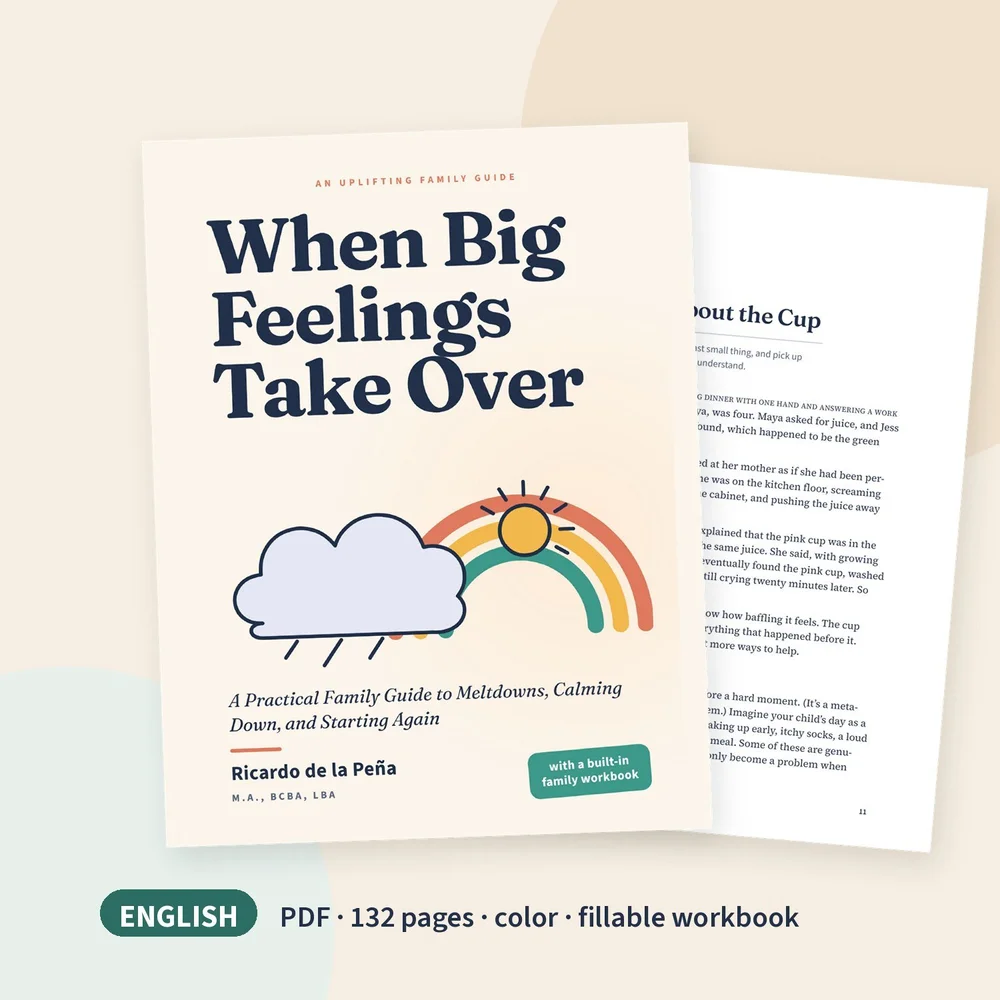
A Practical Family Guide to Meltdowns, Calming Down, and Starting Again. What to do before, during, and after the storm, for parents and caregivers of kids about 2 to 10, with or without a diagnosis.
Read chapter 1 free (PDF) · Leer en español: Cuando las emociones se desbordan
The problem it solves
It was never about the cup
It's 5:15. Dinner isn't ready, your child is hungry and tired, and the juice is in the wrong cup. Ten seconds later they're on the kitchen floor. You explain, you reason, you raise your voice, and it gets bigger.
This book explains what builds up before that moment, what actually helps while it's happening, and how to reconnect and make a better plan afterward. It's written for real homes: the kitchen, the car, the cereal aisle, and the hour you've started to dread.
Inside the book
Before, during, and after the storm
Before
Where most of the progress happens. Spot your child's fragile hours, let some of the pressure out early, teach words for feelings, and practice calm-down skills on calm days. Chapters 3 to 6, including waiting, hearing “no,” and plans that change.
During
A short plan you can follow without thinking, because nobody thinks well in the middle of a meltdown. Safety first, fewer words, limits you can hold without losing your child, and what to do when feelings turn physical. Chapters 7 to 9.
After
Reconnect, repair, and turn a hard day into a better plan for tomorrow. Plus a chapter for the grown-up, and clear signs for when to get more help. Chapters 10 to 13.
What's included
A book you can use tonight
- 13 short chapters in four parts, each with steps to try and words you can use.
- A built-in Family Workbook: Storm Notes, the Fragile-Hours Map, a Waiting Ladder, a one-page Family Storm Plan, and a 14-Day Fewer-Storms Start.
- Kid pages your child can color and fill in: My Feelings Palette, Where Feelings Live in My Body, My Calm-Down Menu, and Fixing It Together.
- “If you only have ten minutes tonight”: a shortcut to the chapter and the page to start with.
- When to get more help: which outbursts deserve a closer look from a professional.
Who it's for
Parents and caregivers of kids about 2 to 10
- Toddlers through elementary school.
- With or without a diagnosis, and with or without services.
- Grandparents, babysitters, and anyone else who shares the hard hours.
What makes it different
- Built on behavioral science, written in plain language.
- Practical over perfect: start with one change you can keep doing.
- Warm, not shaming. Big feelings don't make your child bad, or you a bad parent.
- A matching Spanish edition written for families, not a word-for-word copy.
Free · No sign-up
Print the Family Workbook free
Blank copies of every planning page and kid page in the book, in English and Spanish. Print as many as you need.
About the author
Built by a BCBA who still runs sessions
Ricardo de la Peña, M.A., BCBA, LBA, is a board certified behavior analyst who has spent more than a decade helping children communicate, learn everyday skills, and get through hard moments, and helping their families through those moments too. He writes in English and Spanish for families who may not have easy access to specialized support.
Get the book
Paperback, Kindle, or full-color PDF
Full-color PDF
132 pages with clickable chapters and a fillable Family Workbook. Instant download.
Questions
Before you buy
What ages is this book for?
Children about 2 to 10, from toddlers through elementary school. Many of the ideas also help with older children, with adjustments.
Is it only for children with autism or ADHD?
No. It's written for families with or without a diagnosis, and with or without services. Strong emotions are part of growing up, and some children need a lot more support with them.
Is a meltdown the same as a tantrum?
People use the words differently. The book doesn't ask you to label the storm first. It helps you notice what built up before it, keep everyone safe during it, and plan for next time.
What if my child hits or throws things?
Chapter 9, When Feelings Turn Physical, covers safety first. If anyone is getting hurt, read it before anything else, and bring in your child's doctor or a qualified professional.
Is there a Spanish edition?
Yes: Cuando las emociones se desbordan, in paperback, Kindle, and PDF.
Is this therapy?
No. It's education for families, based on behavioral science. It doesn't replace care from someone who knows your child.
More Uplifting Family Guides